Clients fall through the cracks.
A consultation happens. Nobody follows up. They never come back. That is a lost sale and a lost relationship, every single time it happens.
Leads go cold while you're busy.
A lead fills out a form. It sits until someone has time. By then they have already called someone else.
Your team does software's job.
Hours every week copying data from one system to another. Paid labor doing something that should run automatically.
Real example
One MedSpa was losing $0 every month. They had no idea until we mapped the workflow.
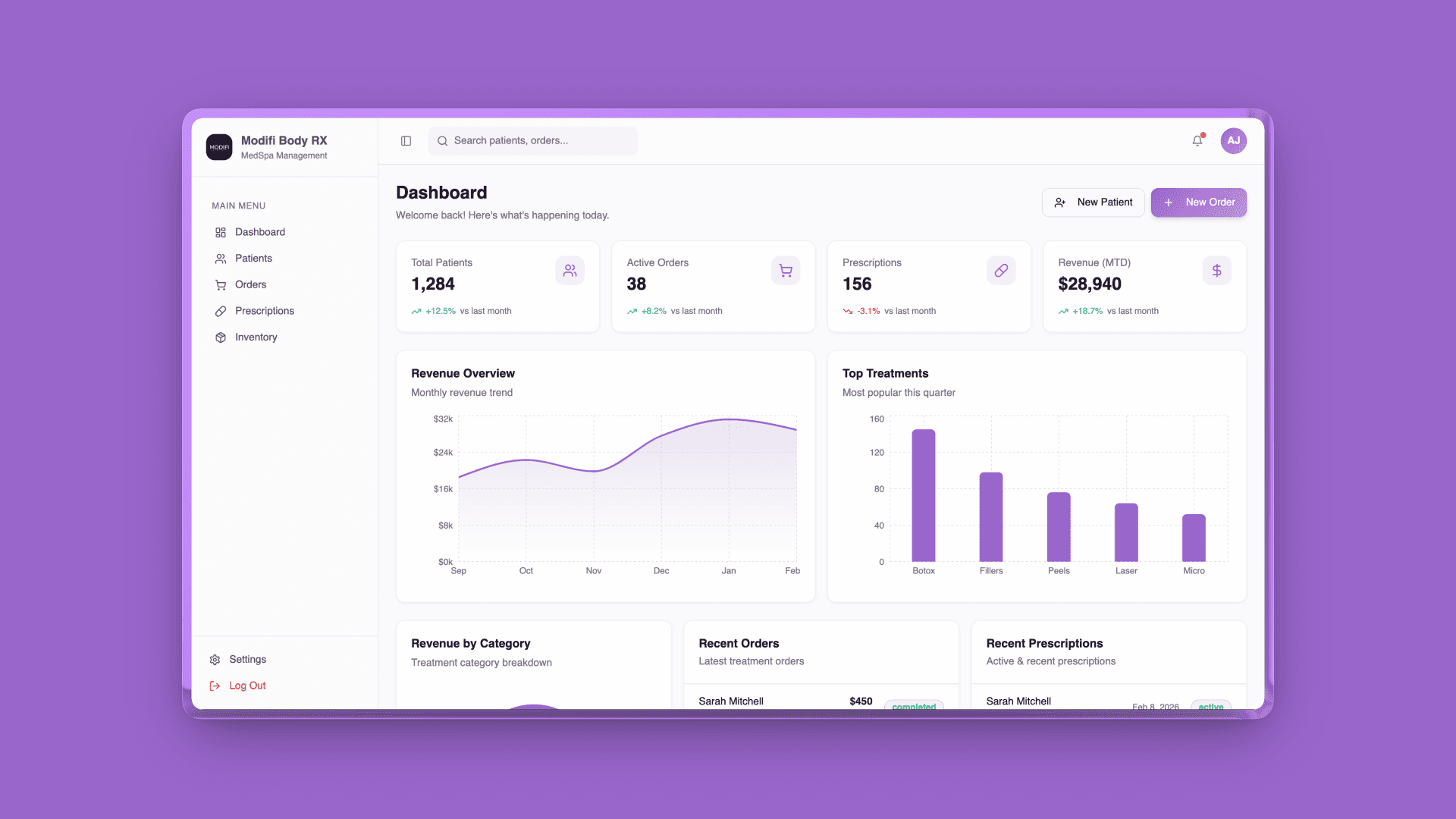
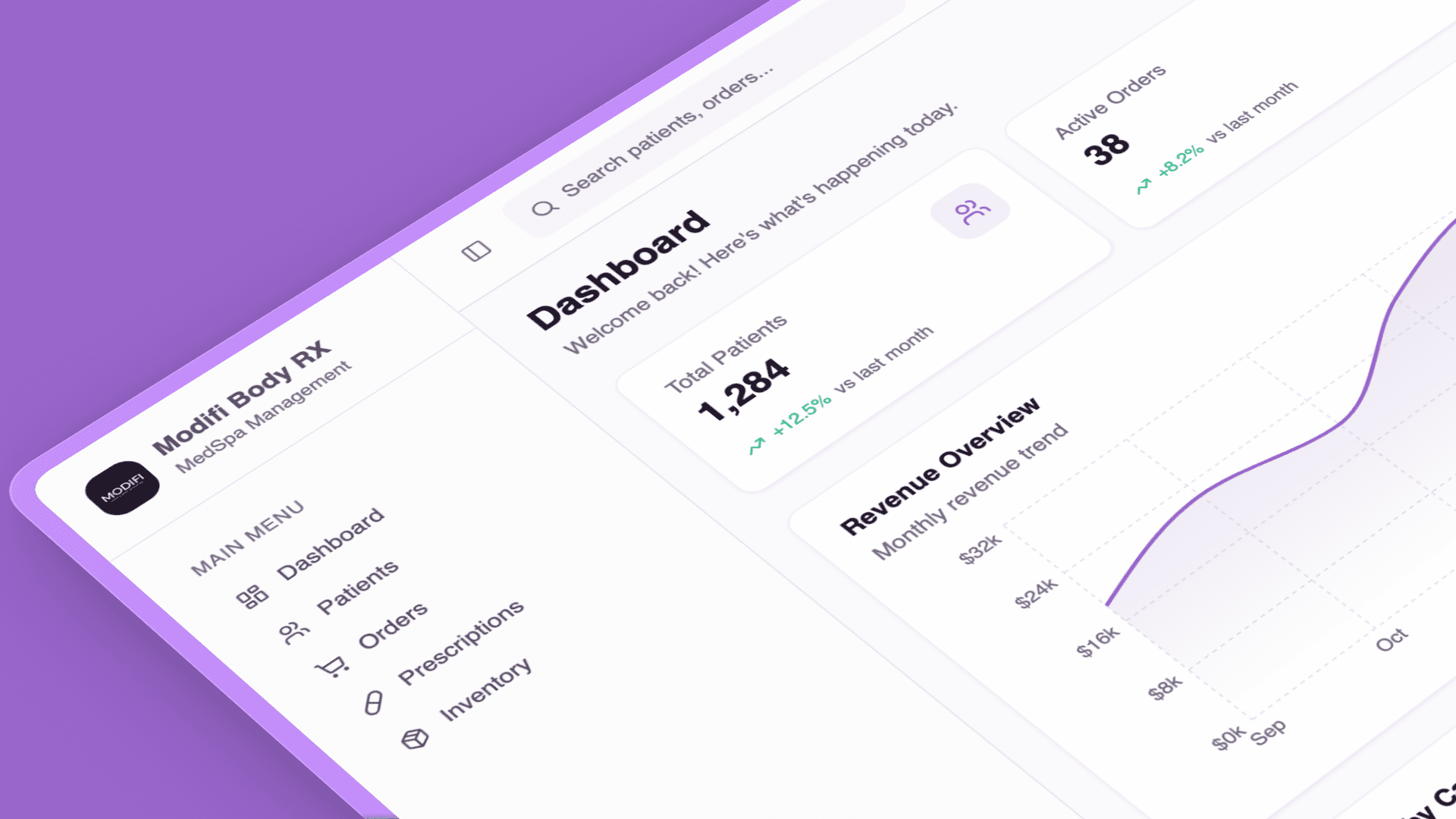
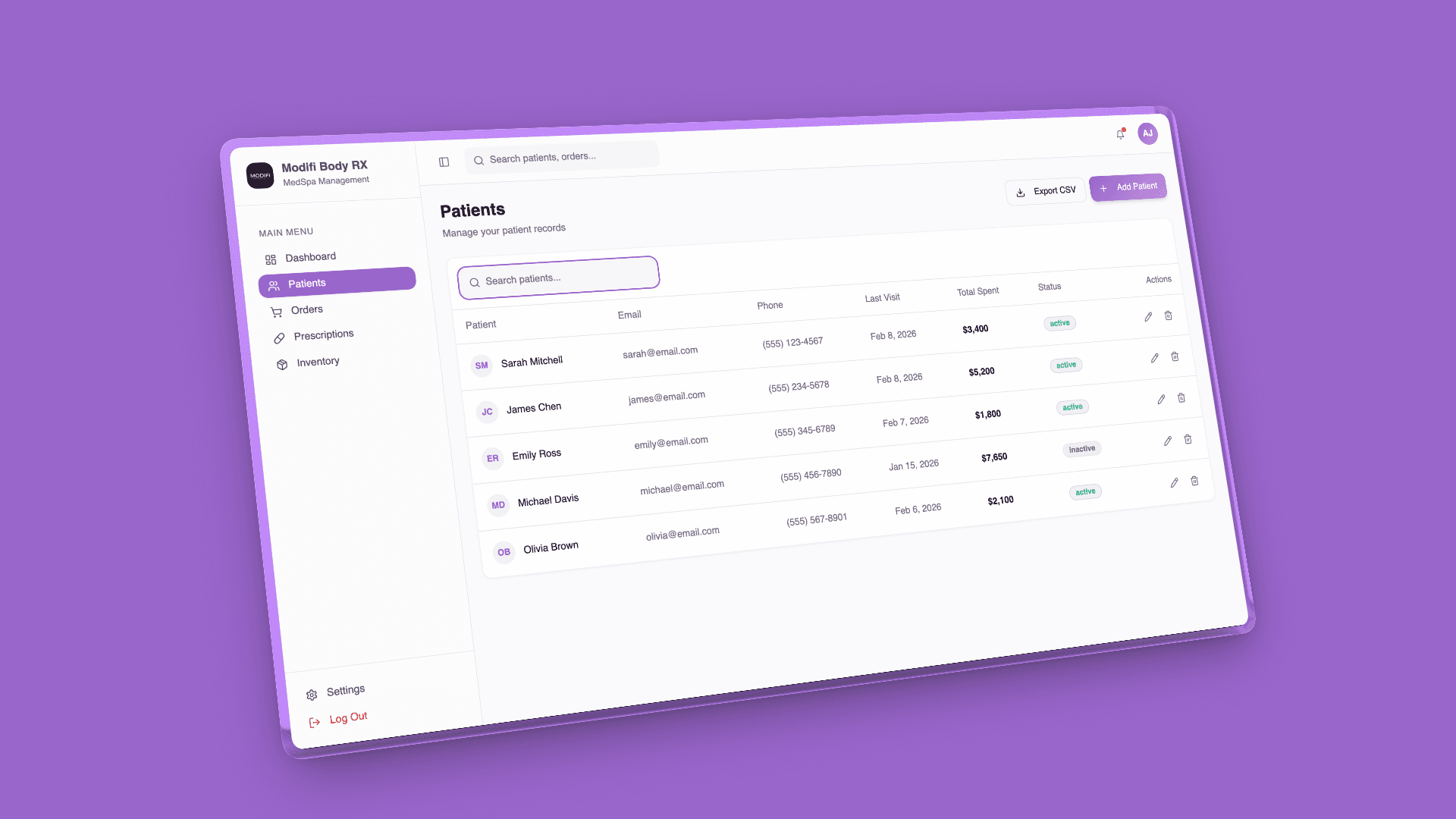
Modifi Laser and Body Sculpting in Houston was tracking prescriptions manually. Paper records. Spreadsheets. Staff memory. Prescriptions fell through the cracks. Patients did not get follow-ups. Revenue walked out the door every single month.
I built a custom system around how their clinic actually operates. Patient records synced automatically. A structured order workflow that nothing could fall through. Automated label generation. A pickup reminder system so staff never had to remember manually.
The monthly losses stopped. The hours their staff spent on admin dropped significantly. The clinic runs cleaner and the money that was walking out the door stays in the business.
Read the full case study→I connect your existing tools or build something entirely new so data flows automatically, not manually. Square, Google Sheets, your CRM, your booking system, whatever you are already using. If it has an API, I can connect to it. If it does not exist yet, I build it.
Every project is different, but here are the types of systems I've built and can build.
Patient and customer tracking systems
One place for records, history, and status instead of scattered across spreadsheets and memory.
Order and prescription management
Structured workflows so nothing gets created and then forgotten.
Automated lead routing and notifications
Every inquiry reaches the right person instantly, not whenever someone checks.
Custom internal dashboards
The numbers that matter to your business, in one place, instead of pulled together by hand.
Internal Operations Tools
Scheduling, job tracking, invoicing. Built around how your team actually works, not how a software company thinks you should work.
Discovery
Before I write a line of code we map your entire operation. Every step, every handoff, every place where something could fall through. I find the actual problem, not just the symptom you are describing.
Hours back every week.
Your team stops spending time on work that should be automated.
Nobody falls through the cracks.
Clients and patients get the follow-up they need, automatically.
Follow-ups happen on their own.
The system handles what your staff used to remember manually.
Revenue stops walking out the door.
Money that was quietly leaking stays in the business.
You own it forever.
No monthly software fees. No lock-in. The code is yours.
Every project is different so there is no standard price. Scope determines cost. Every project is quoted upfront at a fixed price before anything starts. No hourly billing, no surprise invoices.
1-Hour Call
Best for mapping out your full operation, scoping a custom build, or figuring out exactly what it would take to fix what is costing you money.
The call is free. You leave with clarity on what to build and what it would cost - even if you never hire me.
Straight answers. No fluff. If yours isn't here, the discovery call is free.
Why I build software differently.
Most developers build what you ask for. You describe a problem, they write code, they hand it back. If it solves the right problem, great. If it does not, that is your problem.
I spent years watching that play out. Businesses that paid for software that solved the symptom and missed the actual leak. Systems that looked right but did not fix what was costing money.
So I changed the process.
Every project starts with a discovery phase where we map the actual operation and find the actual problem before anyone talks about a solution. What gets built comes out of that, not out of a spec written before anyone understood what was wrong.
That is why Modifi went from losing $15K/month to saving it. Not because I built something impressive. Because I built the right thing.
Anthony Gomez, Founder of Unstaq